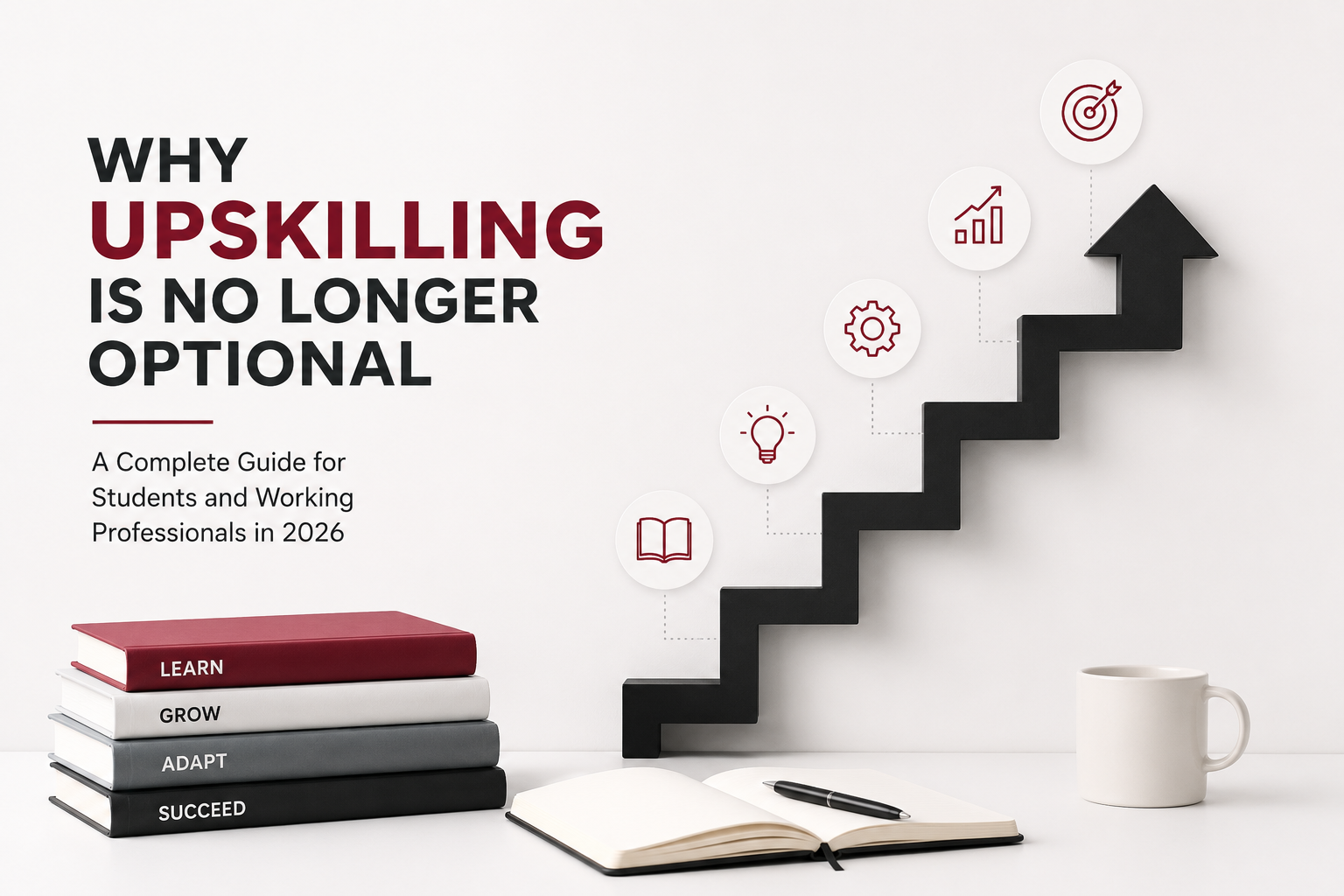
There was a time when a degree was the finish line. You studied hard, cleared your boards, got into a good college, earned your degree, and the job would follow. That path isn't broken — but it's no longer the whole story.
In 2026, the fastest-growing job roles didn't exist ten years ago. Employers now expect candidates to show not just qualifications, but current, applicable skills. AI tools are reshaping entire job functions. Hiring managers are looking past the degree on a resume to ask a sharper question: can this person do the job well, today?
This is why upskilling has moved from a "nice to have" to a core part of every learner's journey - whether you're preparing for board exams, chasing a competitive exam rank, finishing a degree, switching careers, or leading a team. This guide breaks down exactly why upskilling matters now, who needs it, and how to build a learning path that actually works for your stage of life.
How Education Has Changed in the Last 10 Years?
A decade ago, learning was largely linear: school, college, job, done. That model has quietly broken down, and a few forces are responsible.
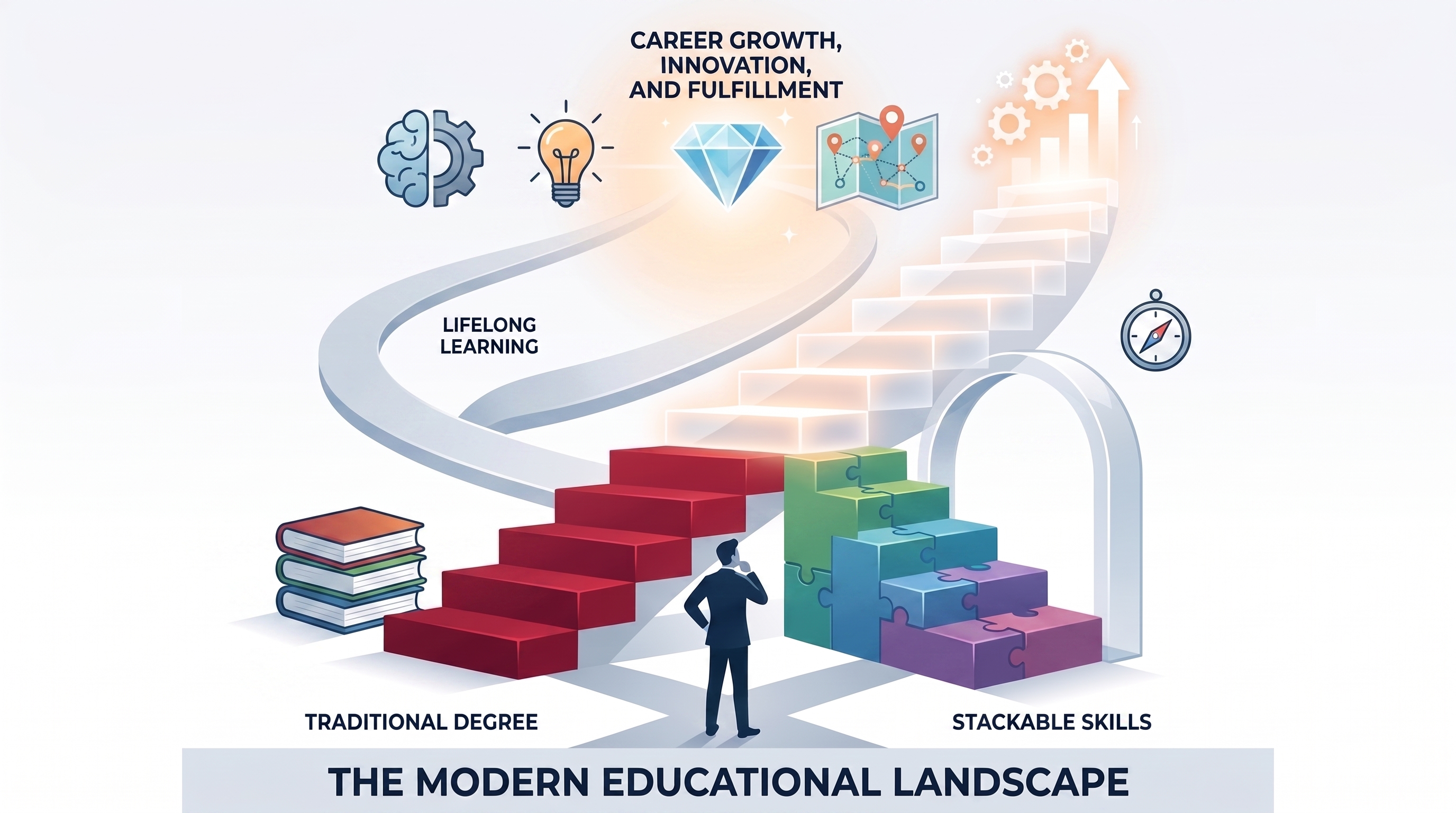
AI and automation have changed which skills hold value. Routine, repeatable tasks are increasingly handled by software, while roles that involve judgment, creativity, and the ability to work alongside AI tools are growing. This isn't about AI "replacing" people - it's about the skill mix employers now expect shifting faster than traditional curricula can keep up.
Online and hybrid learning removed the geography problem. A student in a smaller city can now access the same certification content, the same instructors, and the same course material as someone in a metro hub. This has widened access to quality education dramatically, but it's also raised the bar - because everyone else has that same access too.
Micro-credentials have given learners a way to prove specific, job-ready skills without committing years to a new degree. A certification in data analytics, cloud computing, or digital marketing can now sit alongside a degree and materially change how a candidate is evaluated.
Employer expectations have simply moved faster than academic cycles. Job descriptions increasingly list tools, platforms, and applied skills rather than only degree requirements. The result: your formal education gets you in the room, but your skills - and how current they are - decide what happens next.
Who Needs Upskilling? (Hint: Everyone, Just Differently)
Upskilling isn't a working-professional-only concept. It looks different depending on where you are in your journey.
The school student, preparing for board exams, benefits from strong foundational learning habits and early exposure to digital literacy and problem-solving - skills that pay off long before the first job application.
The college student is often juggling a degree with the pressure to be "employable" by graduation. This is where certifications, internships, and short applied courses alongside a degree start making a real difference.
The graduate stepping into the job market faces the sharpest gap between what a degree certifies and what a job actually requires. This is often the first serious upskilling decision point - do you add a certification, a bootcamp, or hands-on project experience before applying?
The working professional already has experience but may be at risk of skill stagnation, especially in fast-moving fields like technology, analytics, or marketing. For this group, upskilling is about staying relevant and unlocking the next role, not starting over.
The career switcher is making a deliberate pivot, often needing to build credibility in a new domain quickly. Structured certifications and recognized training programs matter enormously here, since they compress the trust-building process.
Corporate teams need upskilling too, and increasingly it's the organization — not just the individual - that invests in this. Structured corporate training keeps teams competitive and reduces the cost of external hiring for new skill needs.
Notice the pattern: whether you're 15 or 45, the question is the same - is what I know still current, and does it match where the world is heading?
Upskilling vs Reskilling: What's the Difference?
These two terms get used interchangeably, but they solve different problems.
Upskilling means deepening your existing skill set - going further in the direction you're already headed. A marketing professional learning advanced analytics tools, or a software developer learning AI-assisted coding practices, is upskilling.
Reskilling means building a new skill set for a different role or field entirely — a career switch. A finance professional moving into data science, or a teacher transitioning into instructional design, is reskilling.
Both are valid, and both are increasingly common - but the right learning path depends on which one you actually need. Upskilling is generally faster and lower-risk since it builds on existing knowledge. Reskilling takes longer and usually benefits from more structured, guided programs, since you're building credibility from a lower base in the new area.
Top Skills Employers Want in 2026
While specific tools change fast, certain skill categories have stayed consistently in demand across industries:
- Artificial Intelligence - practical, applied AI skills, not just awareness of the technology
- Data literacy and analytics - the ability to read, interpret, and act on data
- Cloud computing - foundational for most modern tech infrastructure roles
- Cybersecurity - growing in importance as more business runs digitally
- Business analytics - bridging data and decision-making
- Communication - still consistently ranked as a top employer priority
- Leadership and people management - needed earlier in careers than before
- Critical thinking and problem-solving - harder to automate, more valued as a result
- Prompt engineering and AI tool fluency - an emerging but fast-growing expectation
- Digital marketing - relevant well beyond marketing-specific roles
The common thread isn't any single tool - it's adaptability. Employers are prioritizing people who can learn new systems quickly, not just people who already know today's systems.
Traditional Education + Modern Skills = Career Success
Here's an important distinction: none of this means degrees have stopped mattering. They haven't.
A degree still builds your foundation - critical thinking, subject depth, discipline, and credibility that a short course can't replace. What's changed is that a degree alone is no longer treated as a complete signal of job-readiness.
The strongest career outcomes today come from combining both: solid foundational education, and continuously updated, applied skills on top of it. Degrees build your foundation. Upskilling helps you stay relevant. Neither replaces the other — they compound.
This is also why the strongest learners don't think of education as something that ends at graduation. They think of it as a foundation they keep building on.
How to Choose the Right Learning Path
With so many options — board preparation, foundation coaching, diplomas, degrees, professional certifications, and corporate training — the real challenge isn't access to learning. It's choosing the right path for your specific stage.
A few practical ways to think about it: If you're still in school, prioritize strong foundational learning and exam preparation — this is the stage where fundamentals compound the most over time. If you're in college or about to graduate, look at certifications that complement your degree rather than duplicate it. A commerce graduate adding a business analytics certification, for instance, becomes noticeably more competitive than one relying on the degree alone.
If you're a working professional, audit your current role against where your industry is heading, and pick one or two high-leverage skills rather than trying to learn everything at once.
If you're switching careers, look for structured, recognized programs — ones with a credible institutional backing — since they help establish trust faster in a field where you don't yet have a track record.
If you're managing a team or organization, structured corporate training programs (including partnerships with recognized training institutes) tend to produce more consistent results than ad hoc, individually-driven learning.
The goal isn't to collect the most certificates. It's to build a learning path that's actually aligned with where you're trying to go next.
Lifelong Learning Is the Future
Perhaps the biggest mindset shift this decade has forced is this: learning doesn't end after graduation.
The half-life of specific technical skills keeps shrinking, which means the learners — and professionals — who treat education as a one-time milestone are the ones most likely to feel left behind. The ones who treat it as an ongoing practice are the ones who keep opening new doors, years into their careers.
This doesn't mean constant, exhausting reinvention. It means small, consistent investment — a certification here, a course there, staying curious about what's changing in your field. Over years, that consistency compounds into a career that keeps adapting instead of stalling.
Bringing It All Together
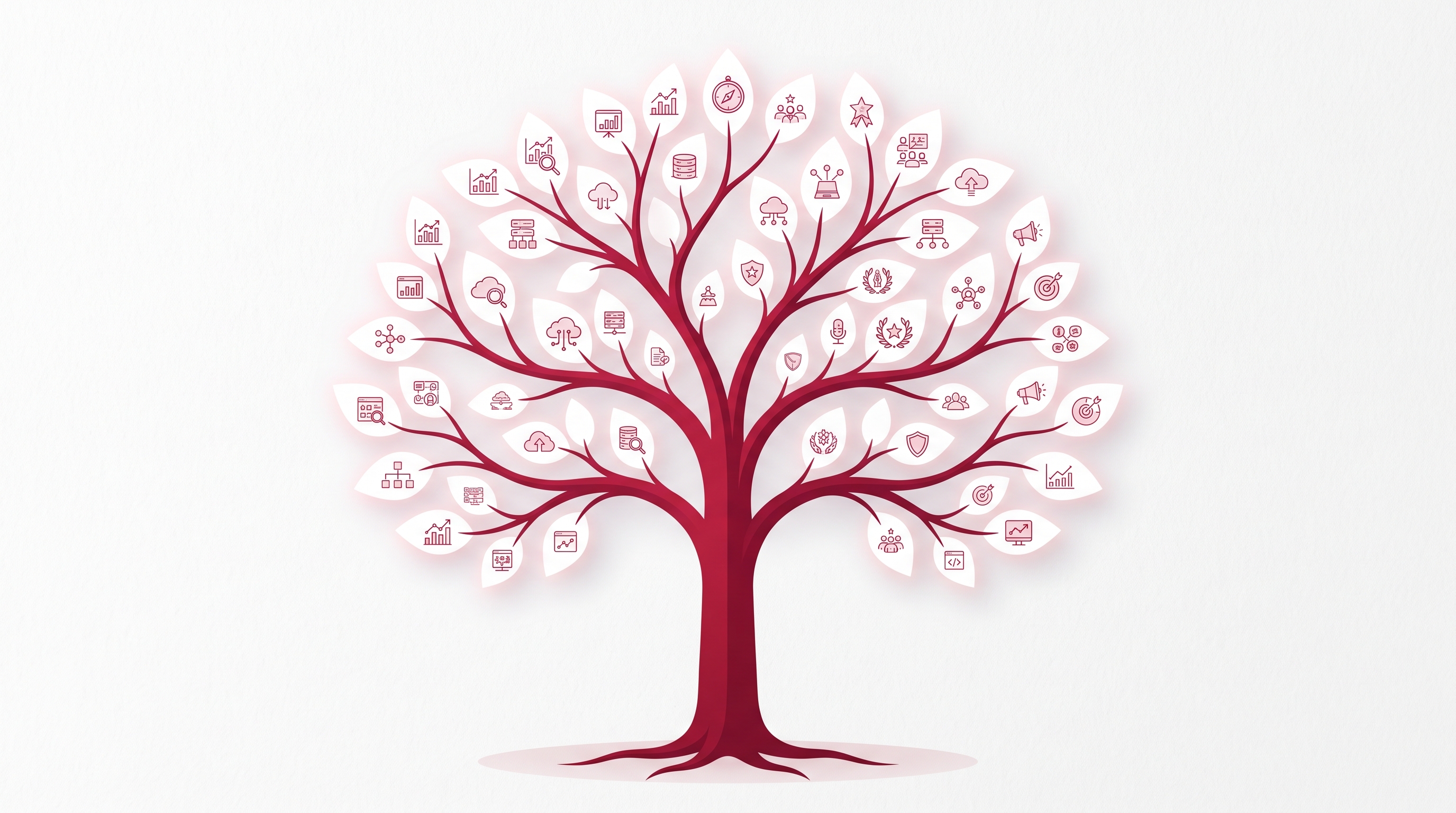
Whether you're preparing for board exams, choosing a degree, applying for your first job, switching careers, or leading a team through change, the underlying idea is the same: your formal education gets you started, and continuous upskilling is what keeps you moving.
Comments
0Sign in and complete your profile to join the conversation.
No comments yet. Be the first to share your perspective.